Winter Boot Sizing Guide: Should You Size Up for Thick Socks?
Affiliate disclosure: This article contains affiliate links. If you buy through them, we may earn a small commission at no extra cost to you. As an Amazon Associate I earn from qualifying purchases. Links go to Amazon search results for the product types we mention, not to specific products we have tested.
Winter boots are harder to size than everyday shoes. You're often wearing thicker socks, the boots are bulkier, linings compress over time, and tall boots add a calf measurement into the mix. A pair that's slightly too small doesn't just pinch. It can make your feet colder, because tight boots squeeze out the warm air and restrict circulation.
Here's how to get the size right, whether you're trying boots on in a store or ordering online.
Measure your feet at home
Feet change over time and are often different sizes. Measure both.
- Time it right. Measure in the afternoon or evening, when feet are slightly larger.
- Wear your winter socks. The ones you'll actually wear with the boots.
- Stand on a sheet of paper against a wall, heel touching the wall, with your weight on the foot.
- Mark the tip of your longest toe. It isn't always the big toe.
- Measure from the wall to the mark. That's your foot length.
- Measure width at the widest part, usually across the ball of the foot.
- Use the larger foot when choosing a size.
Compare your measurement with the size chart for the specific boot. Size charts vary between brands and even between styles from the same brand.
Should you size up for winter boots?
Often, but not always.
- Many insulated boots are already sized with thicker socks in mind. Sizing up could leave them too big.
- Some fashion boots and slimmer leather boots fit like regular shoes, so you may need a half size up for thick socks.
- Removable liners take up space. Check whether the brand's sizing allows for them.
The best guide is the brand's own advice. Look for notes like "runs small", "true to size" or "size up for thick socks", and read what other buyers say about fit, while remembering everyone's feet are different.
The fit checks
Toe room
You should have roughly a thumb's width (about half an inch) between your longest toe and the end of the boot when standing. You'll need it when walking downhill, and for warm air around your toes.
Toe wiggle
You should be able to wiggle your toes freely. If you can't, the boot is too small or too narrow, and your feet will get cold.
Heel lift
A small amount of heel lift is normal in many boots, especially stiffer ones. A lot of lift means the boot is too big or the wrong shape, and can cause blisters. Lacing the boots firmly around the ankle reduces lift.
Width
The ball of your foot should sit at the widest part of the boot without pressing against the sides. If you have wide feet, look for boots offered in wide fits rather than just sizing up in length.
Instep
The top of your foot shouldn't feel pressure when laced or zipped. Pull-on boots can be tight across a high instep.
Tall boots and calf fit
For tall winter boots, calf fit matters as much as foot size.
- Sit with your foot flat on the floor and knee at a right angle.
- Measure around the widest part of your calf over the leggings or jeans you'll wear inside the boots.
- Compare with the boot's listed shaft circumference, if given.
If the shaft is too tight, look for wide-calf versions, adjustable buckles, elastic panels or lace-up backs. Search wide calf waterproof winter boots to see styles with roomier shafts.
Socks and insoles
- Wear the right socks for the fit test. Wool or synthetic socks are warmer and drier than cotton. See our thermal base layers guide for materials.
- Avoid layering socks in a snug boot. It can make feet colder.
- If you use custom insoles or orthotics, try boots with them in. Removable footbeds make room.
- Slightly roomy boots can sometimes be fixed with a thicker insole. A wool felt insole adds warmth too.
Buying winter boots online
- Check the brand's size chart and measure your feet first.
- Read the return policy before ordering. Many retailers require boots to be unworn outdoors for returns.
- Try boots on indoors, on a clean floor or carpet, wearing your winter socks.
- Walk around for 10 to 15 minutes, including up and down stairs.
- Keep the packaging until you're sure.
Kids' winter boots
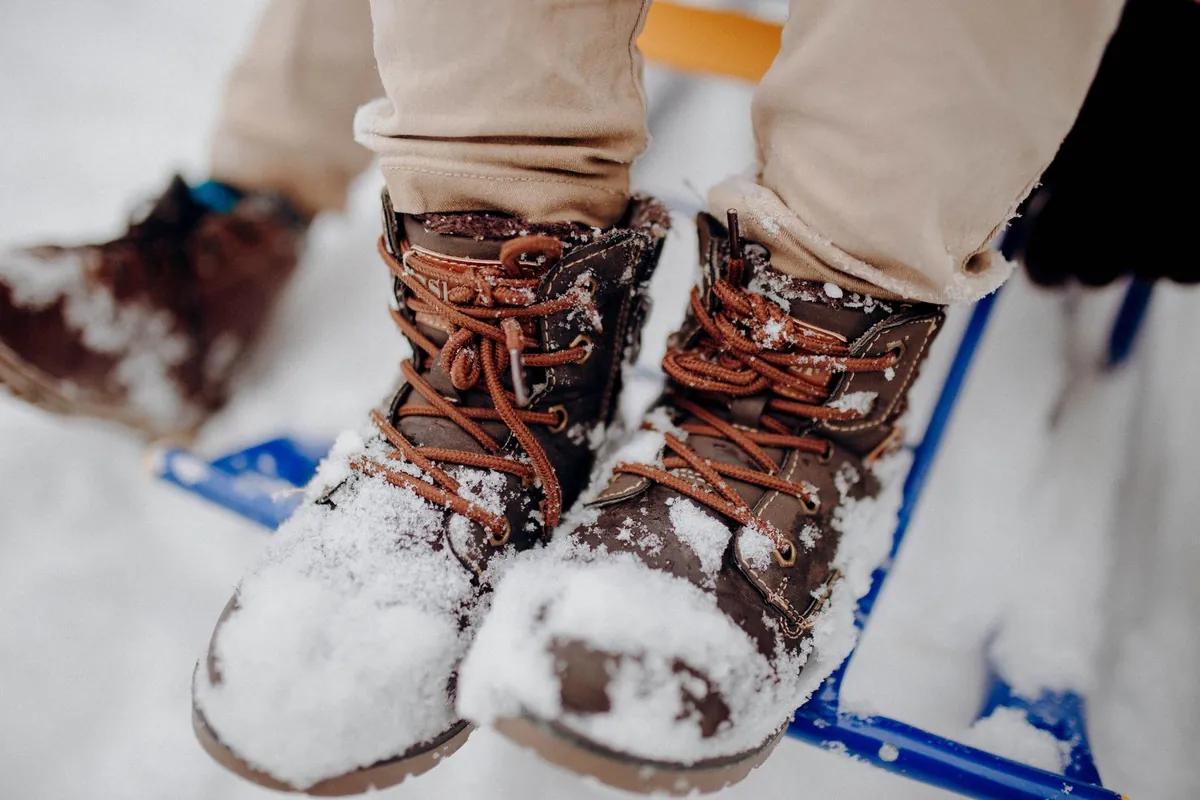
Kids' feet grow quickly, so many parents buy with a little growing room. Too much room can cause tripping and blisters, though. A common approach is about a thumb's width of space, and checking fit again partway through the season.
Signs your boots don't fit
- Numb, tingling or very cold toes
- Rubbing, blisters or red marks
- Toes hitting the front when walking downhill
- Your foot sliding forward or heels lifting a lot
- Pain across the top of the foot
Once you've found the right size, see our snow boots guide for features, and our boot styling guide for ways to wear them.
Frequently asked questions
Should winter boots be a size bigger?
Sometimes. Many insulated boots already allow for thicker socks. Check the brand's sizing advice and try them with your winter socks.
How much toe room should winter boots have?
About a thumb's width, roughly half an inch, between your longest toe and the end of the boot.
Are tight winter boots warmer?
No. Tight boots restrict circulation and squeeze out insulating air, so feet often get colder.
What if my feet are two different sizes?
Fit the larger foot, and use a thicker insole or sock on the smaller side if needed.
How do I measure my calf for winter boots?
Measure the widest part of your calf while seated, over the clothes you'll wear inside the boots.
Read next: How to Care for Waterproof Boots So They Stay Waterproof →